

NEWS & UPDATES

Versata v. Ford And The Power Of Trade Secrets – A Series (3 of 3)
In this third and final installment of our series on the Federal Circuit’s blockbuster Versata v. Ford decision, we explore how the court rejected the "atomic" defense to protect complex software architecture as a whole. By strategically separating the information delivered to licensees from the internal definitions of their trade secrets, software innovators can leverage "information asymmetry" to secure their IP and maximize legal liability if a breach occurs.
Versata v. Ford And The Power Of Trade Secrets – A Series (2 of 3)
When protecting proprietary software, relying on a single legal mechanism is a recipe for vulnerability. In this second installment of our series on the Federal Circuit’s blockbuster Versata v. Ford decision, we explore how contract law acts as a powerful, independent backstop to trade secret claims, and how the court reinforced the "Wrongdoer Rule" to reinstate an astronomical $82.26 million verdict.
Versata v. Ford And The Power Of Trade Secrets – A Series (1 of 3)
The Federal Circuit decision late last month in Versata v. Ford is one of the most important decisions for companies that generate and monetize intellectual property in quite some time. In fact, it is so important this is just the first in a series of posts on the case.

Locking the AI Door: Active Secrecy and Unilateral Authority in the Age of Distillation
With patent offices and courts making software eligibility a volatile minefield, trade secrets have become the ultimate tool for exercising unilateral authority over AI systems. But as my mentor and close friend James Gatto recently detailed, protecting an AI trade secret requires moving from passive legal agreements to active, technological defenses against threats like prompt injection and model distillation. This post explores how to lock the door on your AI IP.

An Abdication of Duty: The Supreme Court Denies Certiorari in USAA v. PNC Bank
Earlier this week, the Supreme Court denied certiorari in USAA v. PNC Bank, permanently wiping out a $223 million infringement verdict and leaving the broken state of Section 101 intact. This post explores the impact and origins of the mess.

The Data Moat: What One Legal Tech AI Partnership Teaches Us About IP Strategy
Algorithms are rapidly becoming a commodity. To build a defensible AI business, you need a "Data Moat." Using the recent Paximal and Juristat partnership as a case study, this post explores how connecting agentic AI workflows to proprietary data layers shifts the paradigm from simple imitation to evidence-based strategy.

CONSTELLATION DESIGNS: A New CAFC Decision That Provides Insight Into What Makes A Claim “Abstract,” And Some Strategy Observations
A recent Federal Circuit decision “splits the baby” in determining patent eligibility with respect to patent claims arising from the same innovation. This post explores the Constellation Designs case, examining what the differences between the invalidated and upheld claims tell us about the CAFC’s application of the Alice/Mayo Test, and proposes an interesting thought experiment involving blending patent and trade secret protection.
Data-Driven Excellence: A Top-Tier LexDana Ranking
LexDana’s 2026 Patent Intelligence Rankings have placed me at #11 nationwide for Overall Performance. This brief post explores the data behind these rankings and why this recognition is truly a testament to the brilliant innovators we represent and the exceptional team at Esplin & Associates.
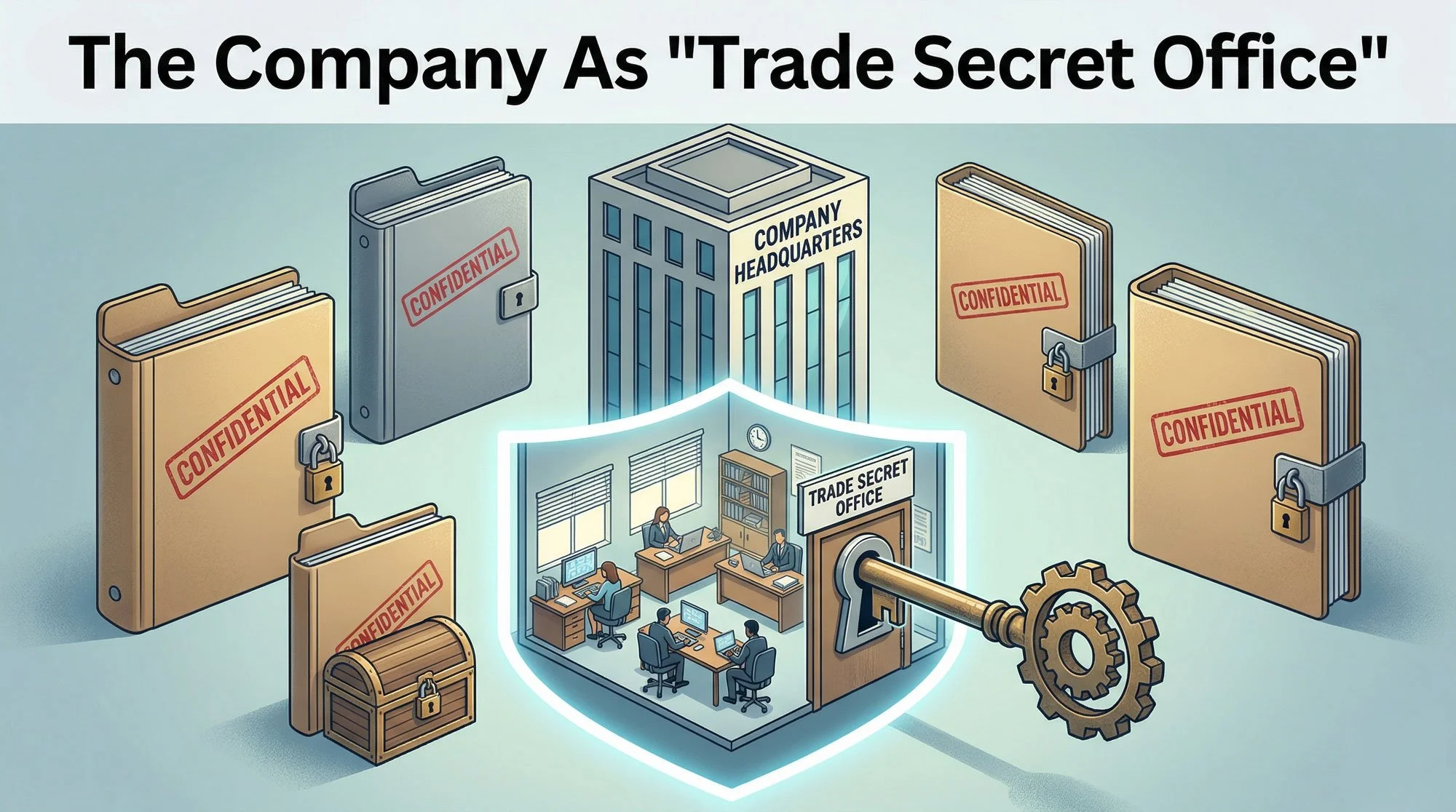
The Company As “Trade Secret Office”
Most innovation strategies rely on the hope of government validation, but trade secrets flip the script. This time, our focus is on the “Internal Examiner” model, where the power to create legal certainty resides entirely within the enterprise. By utilizing internal “reasonable measures” to grant protected status to its own assets, a company eliminates the uncertainty of external backlogs and shifting administrative policies. Learn how to take control of the innovation pipeline and build an operational moat without waiting periods or maintenance fees.

A Strategic Architecture for Elevating Quality in Legal Work Through the Use of AI
Most discussions about AI in the law focus on efficiency, but for the serious practitioner, speed is a secondary benefit. This week, I explore the first principle of AI adoption: using technology to do better work than would be accomplished without it. By positioning themselves between a tireless “junior associate” for preparatory analysis and a skeptical “senior reviewer” to simulate the perspective of a patent examiner or PTAB judge, the AI-assisted lawyer achieves a level of technical precision that was previously humanly impossible. Learn why the human attorney remains the essential architect of consistency and coherency, keeping themselves in the decision-making seat to ensure that the final work product is as elegant as it is legally undeniable.
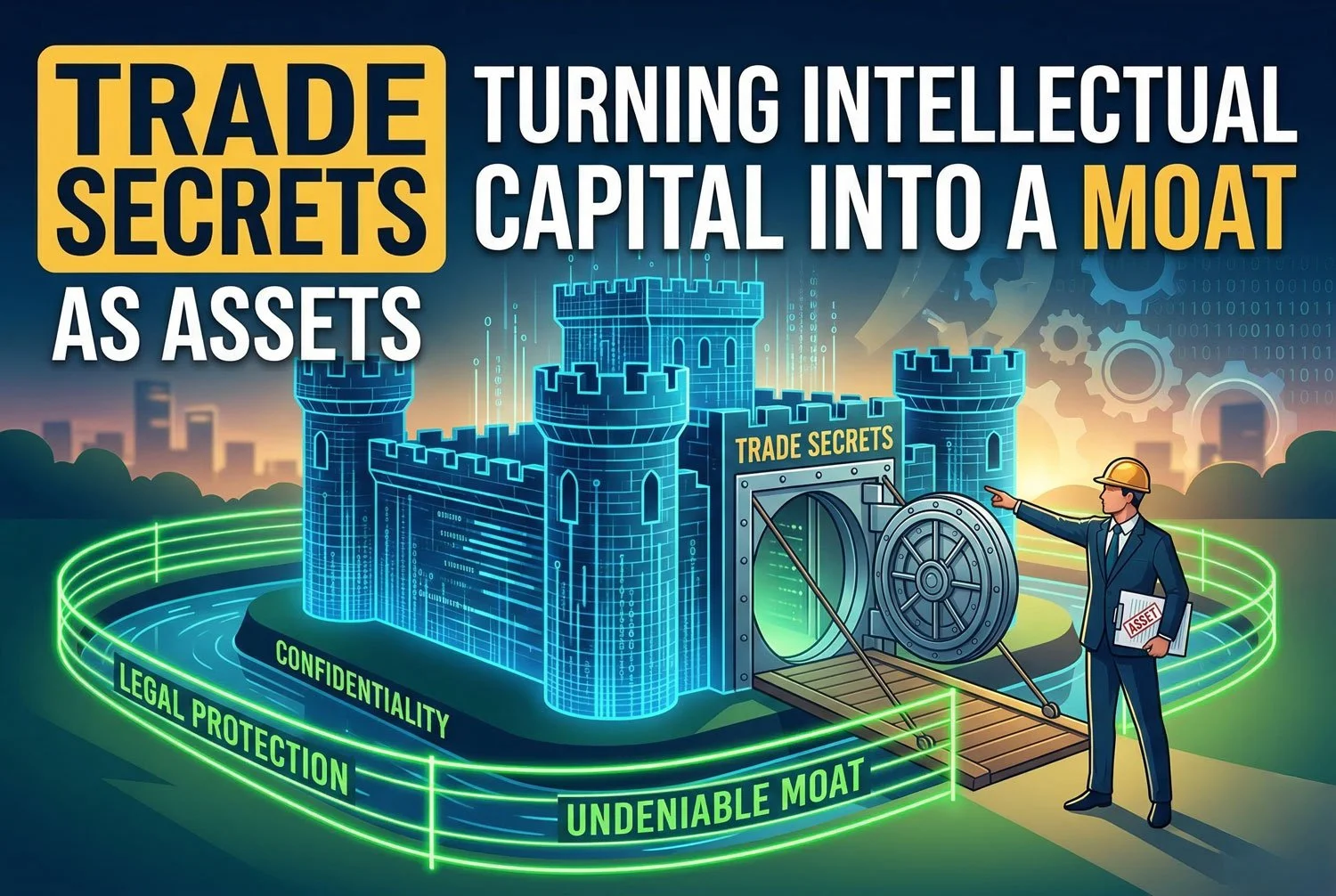
Trade Secrets as Assets: Turning Intellectual Capital into a Legally Undeniable Moat
Most companies treat trade secrets as a passive legal status—something they “have” simply because they haven’t told anyone. In my latest post, I break down why this is a high-risk strategy and propose a more proactive approach. Learn what specific data points should be generated for every trade secret asset to transform vague know-how into a defensible “Innovation Ledger,” and how this documentation provides critical leverage during M&A due diligence, technical collaborations, and internal audits.
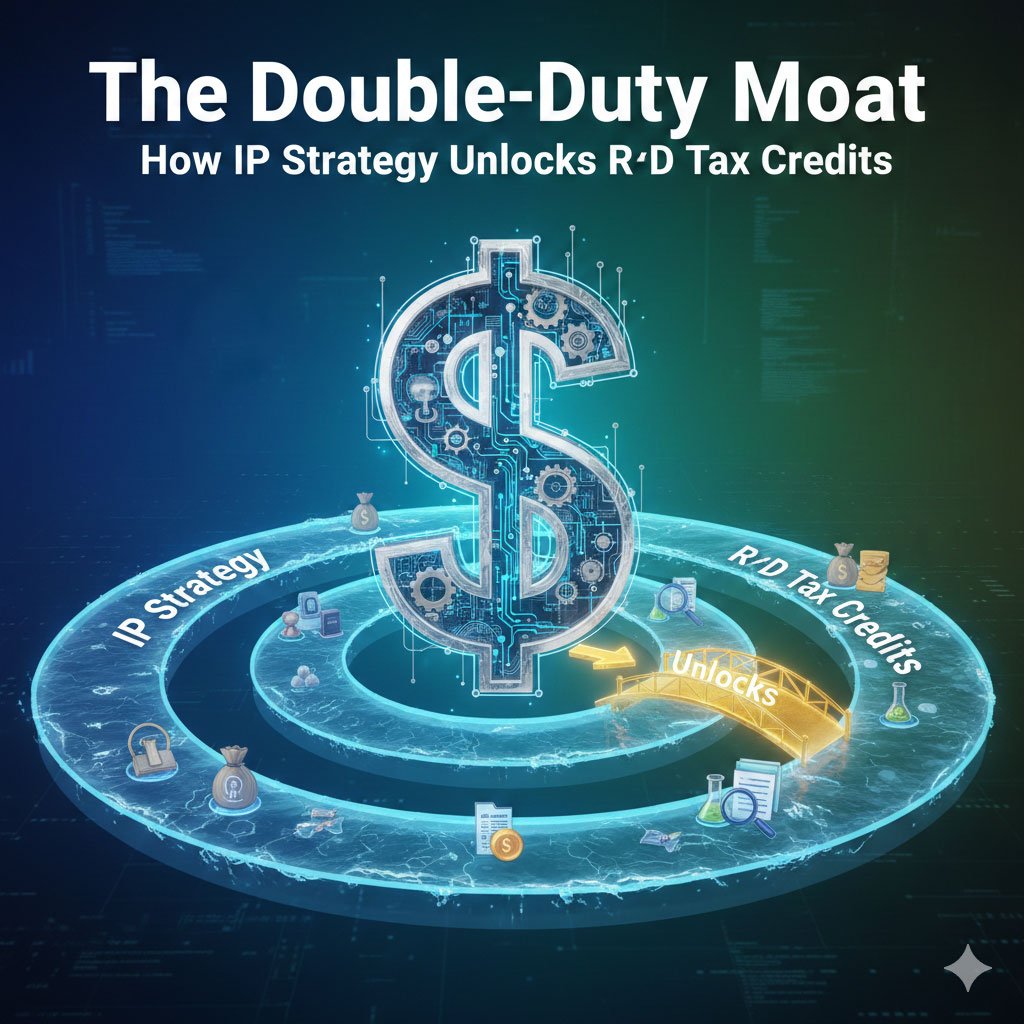
The Double-Duty Moat: How IP Strategy Unlocks R&D Tax Credits
Founders love R&D tax credits, but the IRS documentation requirements can be an administrative nightmare. This week, I explore how working with an IP attorney to secure your patents and trade secrets naturally generates the exact “contemporaneous proof” the IRS demands. Learn how to use a single strategic effort to build a legal moat and unlock non-dilutive capital.
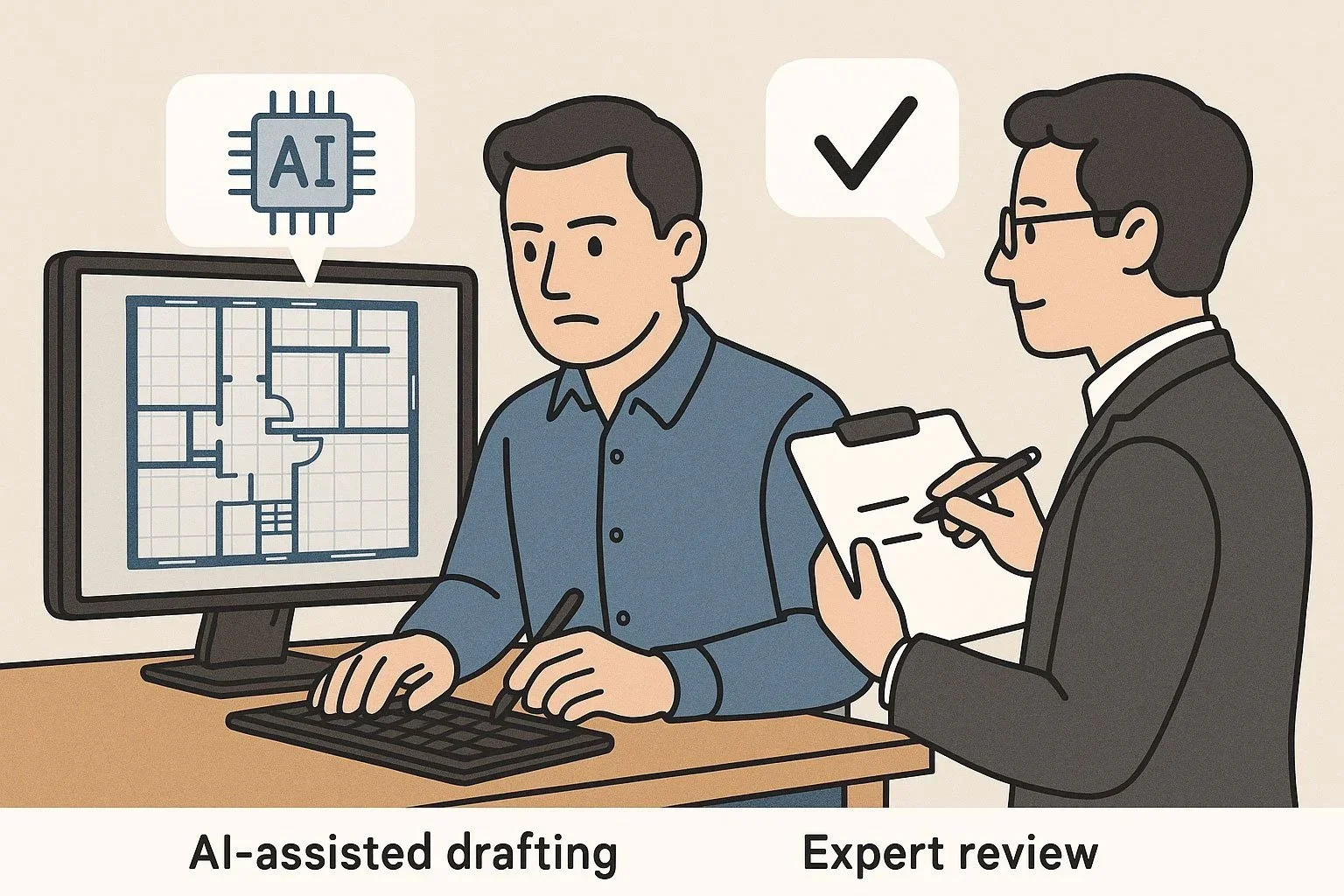
Achieving More with Less: A 2026 Update on AI-Assisted Patent Strategy
A few months after launching our AI-assisted application service, the results are in: inventors are producing higher-quality provisional patent application content than ever before. By rewarding client "sweat equity" with a unique fee structure, we are enabling more aggressive filing strategies that fit within existing budgets. This week, I discuss how this "Inventor-in-the-loop" approach is redefining a core value proposition of modern patent prosecution.
USAA v. PNC Bank and the Definition of the Abstract Idea
The USAA v. PNC Bank petition for certiorari brings the Section 101 “abstract idea” exception back to the Supreme Court, highlighting the logical tension in labeling processes involving tangible objects as abstract. This post explores the fundamental difficulty of distinguishing between abstract concepts and their physical applications when every idea is, by its very nature, abstract.

Federal Circuit Update: The High Cost of Vague Trade Secret Identification
In the era of high-speed innovation, Intellectual Property Conservation is about clarity, not volume. Following a new ruling from the Federal Circuit, we examine the “Identification Trap” that causes even the most technical “secret sauce” to lose legal protection. Learn how to define your moat before the audit begins and why a single, precisely identified secret is worth more than a thousand unexplained exhibits.

A New Partnership Focused on Trade Secret Litigation Financing
Congratulations to Tangibly and SIM IP on their new partnership! This piece takes a look at what this could mean for companies that generate intellectual property and take protecting it seriously.

The Risk of AI-Assisted Invention And Your Company’s AI Policy
What facts regarding AI usage will determine whether the patents your company gets for AI-assisted invention can be enforced? The truth is: nobody knows yet. And your AI policy should reflect that.

Beyond the Transformer: After the LLM, Then What?
Transformer-based LLMs dominate contemporary AI, yet their architecture embeds profound inefficiency.
Defining the "Something More": How In re Desjardins and the "SMED" Memo Reshape AI Eligibility
For over a decade, the patent eligibility of software and artificial intelligence has been haunted by the vague requirement of Alice Corp.: to demonstrate that a claim contains "something more" than an abstract idea. On December 4, 2025, USPTO Director John A. Squires provided the definitive answer to what that "something more" actually looks like, codifying the recent decision in In re Desjardins as the binding framework for the future of AI prosecution.

Revised Inventorship Guidance for AI-Assisted Inventions: A New Direction from the USPTO
The United States Patent and Trademark Office (USPTO) published its Revised Inventorship Guidance for AI-Assisted Inventions on November 28, 2025, immediately rescinding in its entirety the guidance issued under the previous administration, and creating uncertainty concerning the patentability of at least some AI-assisted inventions.